Why Your Exit Strategy Should Be Decided Before You Buy
One of the most common mistakes in cask investment is treating the exit as a problem to solve later. In reality, how you plan to exit a tequila cask should shape which product you buy in the first place — different exit structures carry meaningfully different risk, certainty, and upside profiles, and the right choice depends on what you’re actually trying to achieve.

The Main Exit Routes
1. Open Market Sale (Free Market)
The cask is sold at prevailing market rates once it reaches maturity, typically to a brand seeking aged stock to bottle. There’s no pre-agreed price — the eventual sale value depends on market conditions, brand demand, and the cask’s specific qualities (distillery, category, cask type) at the time you choose to sell.
Best suited to: investors comfortable with market exposure in exchange for higher potential upside, and who don’t need price certainty locked in ahead of time.
2. Fixed Buyback
A distillery or brand agrees, in a commercial contract signed at or near the point of purchase, to buy the cask back at a specific price on a specific date. This removes much of the exit uncertainty inherent in an open market sale, in exchange for capping the potential upside at that pre-agreed figure.
Best suited to: investors prioritising certainty of exit and price over maximum possible return — a genuinely different objective than chasing the highest achievable number.
3. Minimum Return
A hybrid structure: a contractually secured minimum return is guaranteed, but if the cask achieves a stronger sale price at resale, the investor benefits from that upside rather than being capped at the guaranteed floor.
Best suited to: investors who want downside protection without fully giving up participation in stronger-than-expected market outcomes.
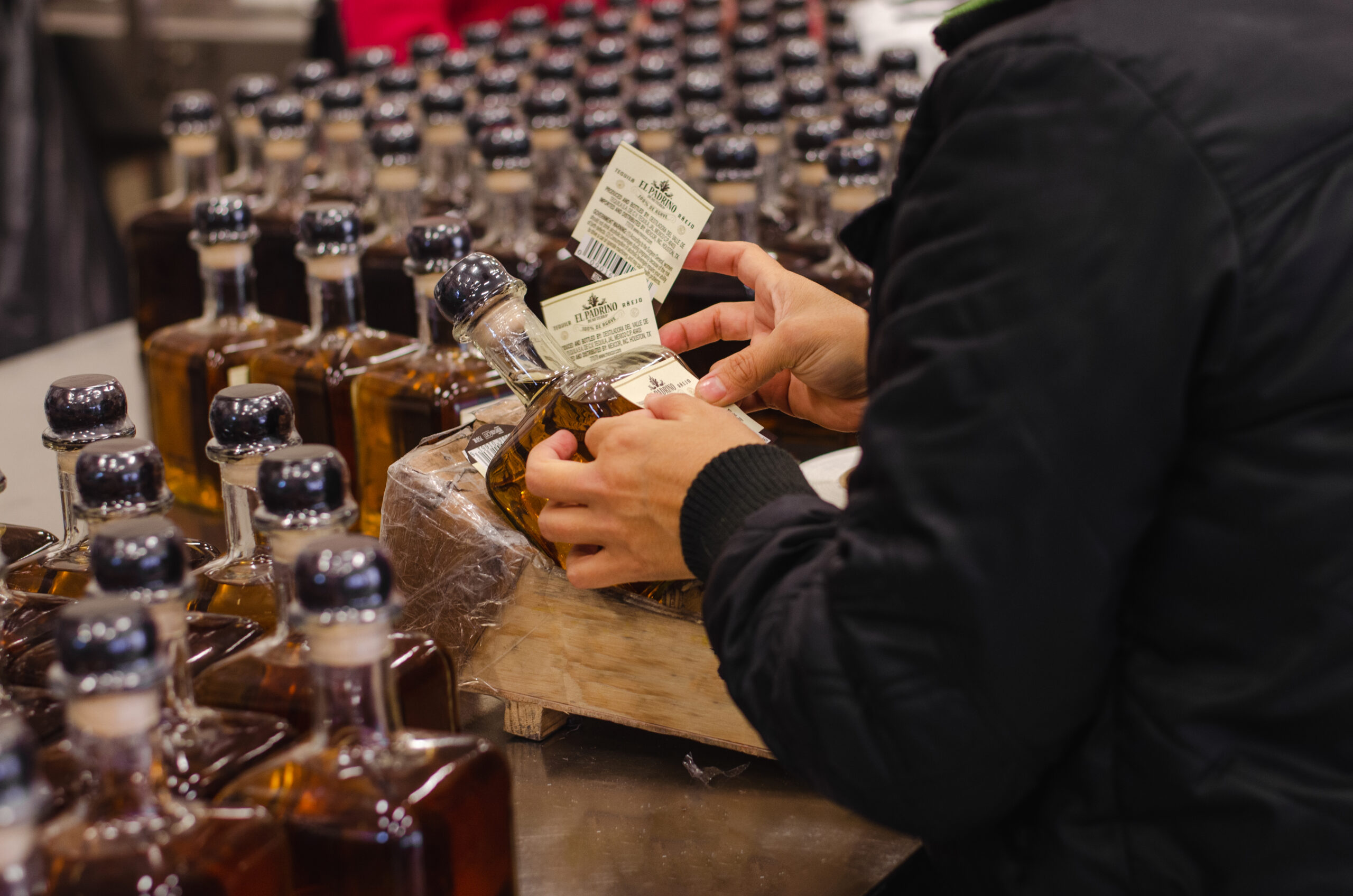
4. Self-Bottling
Rather than selling the cask itself, some investors choose to have the tequila bottled under their own label (or an existing brand relationship) and sell the finished product directly. This route offers potentially higher margins, since it captures brand and retail value rather than just wholesale cask value — but it introduces meaningfully more complexity: bottling costs, label design and approval, import and distribution logistics if selling outside Mexico, and the marketing effort required to actually sell bottled product. It suits investors with existing brand-building experience or ambition more than those seeking a passive investment.
How to Choose Between These Options
Ask yourself:
- How much certainty do I need? If you’re investing capital you’d be genuinely uncomfortable losing, a Fixed Buyback or Minimum Return structure removes a meaningful amount of exit risk.
- How much upside am I willing to give up for that certainty? Free Market structures typically carry higher projected returns precisely because they carry more exit risk.
- Do I want to be hands-on? Self-bottling is a fundamentally different, more active undertaking than the other three routes, which are largely passive once the initial purchase is made.
- What’s my timeline? Buyback structures have a defined date built in; Free Market sales depend on choosing your moment based on market conditions.
At GORDON, these considerations map directly onto our three core product tiers — Free Market, Fixed Buyback, and Minimum Return — each structured around exactly this trade-off between certainty and upside.
What the Exit Process Actually Looks Like in Practice
- Approaching maturity, the cask is re-gauged to confirm current volume and ABV, since evaporation will have changed both since purchase.
- For Fixed Buyback or Minimum Return structures, the pre-agreed contract terms with the brand are simply executed on the agreed date.
- For Free Market sales, the broker approaches potential buyers — typically brands seeking aged stock — using current comparable sales and category demand to negotiate a price.
- Ownership is formally transferred through the bonded warehouse’s records, alongside the sale contract itself.
- Proceeds are paid out, net of any final storage, insurance, or performance fees due.
We cover the broader mechanics of how these commercial contracts are structured in How Spirit Cask Commercial Contracts Work, and how the wider resale market functions in What Is the Secondary Market for Spirit Casks, and How Does It Work?
Frequently Asked Questions
Can I change my exit strategy after I’ve already invested?
Generally, no — the exit structure (Free Market, Fixed Buyback, or Minimum Return) is typically fixed at the point of purchase as part of the commercial contract. This is exactly why choosing the right structure upfront matters.
What happens if my cask hasn’t sold by the time I want to exit under a Free Market structure?
Timelines depend on prevailing brand demand at that moment. This is one of the key trade-offs of choosing market exposure over a pre-agreed buyback — a Fixed Buyback or Minimum Return structure removes this specific uncertainty by design.
Is a Fixed Buyback price guaranteed no matter what happens in the market?
The price and date are contractually fixed, but the guarantee is only as strong as the brand or distillery that signed the contract. Verifying the counterparty’s credibility is an important part of due diligence, not a formality — see What Questions Should You Ask Before Investing in a Spirit Cask?